Why We Moved Our Own Site Off WordPress (and When You Shouldn't)
After a decade of building on WordPress, we rebuilt leaveit2beamer.com on a platform we wrote ourselves. Here is what pushed us, what we gave up, and the honest list of businesses that should stay right where they are.
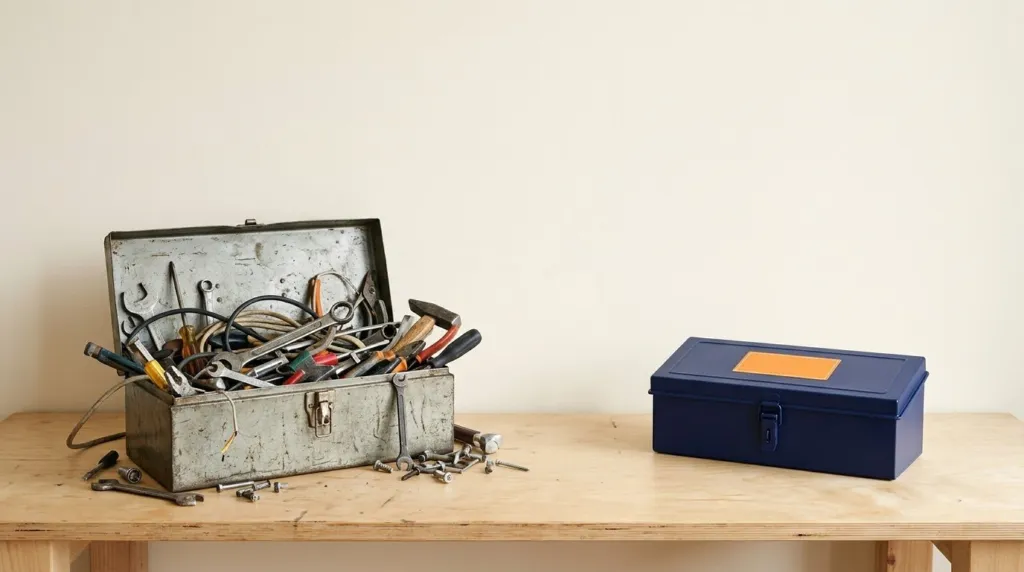
For most of my career, "a website" meant a WordPress website. I built them for furniture retailers and medical device companies and breweries and lawyers. I still build them, and I still look after a good number of them on care plans. So when I tell you we moved our own site off WordPress this fall, I want to be clear that this is not a breakup post. It is a story about fit.
What pushed us
The owner's job had become a technician's job
Watch a business owner update a WordPress site and you will see it. They want to change the hours. To do that they need to find the right page, open the builder, find the right block inside the right section, change the text, and hope the mobile view did not shift. Then a yellow banner tells them nine plugins need updates, and they close the tab.
Our clients are restaurant owners and lawn care crews and trainers. The things they change are the same every week: hours, a special, a photo, a price, a sentence on the home page. They should be able to do that from their phone, in a screen that only shows those things, without ever meeting the word "plugin." WordPress can be bent that way, with enough custom work. It fights you the whole time.
Every site was a stack of other people's decisions
A typical small-business WordPress site runs on a theme, a page builder, a forms plugin, an SEO plugin, a caching plugin, a security plugin and a dozen smaller ones. Each is a company with its own release schedule, pricing changes and ideas about how things should work. When one of them changes direction, your site inherits the decision. A large part of a care plan is quietly absorbing those decisions so the owner never sees them.
That is a fine service to sell. It is a strange thing to need for a six-page site.
We were already writing software
The thing that tipped it was the apps. We had built a closing app for a store and a phone app for a lawn care company, and both needed a website that knew about them: the same sign-in, the same look, the same place to change the hours that the app also uses. Bolting that onto WordPress meant building a bridge to a house we did not own. Building the house ourselves meant the site and the app were simply the same building.
What we built instead
A platform of our own: one codebase, one small manager app per client, with a site that is made of sections an owner can edit and nothing else. The owner's screen has their pages, their hours, their photos, their forms and their business details. There is no plugin page because there are no plugins. Updates happen when we deploy, for every client at once, tested first.
This site runs on it. So do the apps. When we add a feature for one client, every client gets it on the next deploy.
What we gave up
I would be lying if I said it was all upside.
The plugin ecosystem. If a client wants a booking calendar tomorrow, on WordPress I install one. On our platform I build one, or connect to a service that does it. That is slower the first time and better every time after, but it is slower the first time.
Familiarity. Plenty of owners, and plenty of marketing staff, already know WordPress. A new screen is a new screen, however simple.
Portability. A WordPress site can be moved to any host and handed to any other WordPress developer. A site on our platform is cared for by us. We document everything and the owner always owns their content and domain, but it is a different relationship, and I say so up front.
When you should stay on WordPress
Here is the honest list. If you recognize yourself, stay put, and if your site needs work, we will happily do it in WordPress.
You publish a lot. A newsroom, a heavy blog, a site with a dozen editors. WordPress was built for exactly this and it is still the best at it.
You sell a lot of products online. A real store with hundreds of SKUs, shipping rules and tax tables belongs on WooCommerce or Shopify, not on a custom build.
You depend on a specific plugin. A membership system, a course platform, an industry tool that only exists as a WordPress plugin. Keep the thing that works.
You have in-house people who know it. Their fluency is worth more than a tidier admin screen.
You want to be able to walk away from your developer tomorrow. That is a legitimate requirement, and WordPress serves it best.
When a move makes sense
You are a local business whose site is really a handful of pages, your updates are hours and photos and prices, you are tired of the yellow banners, and you either have or want a tool for running the business that should feel like part of the same thing. That was us. It is a lot of the businesses we work with.
Either way, the website page describes what a build includes and the pricing page has the numbers, and they are the same numbers whichever way we build it. If you want a second opinion on your own site, WordPress or not, a free call is where we would start, and "stay where you are" is an answer we give often.
Key takeaway
WordPress is still a good answer for a lot of businesses, and we still build and care for WordPress sites. We moved our own site because an owner who only needs to change hours, photos and prices should never have to think about plugins, and because we wanted to own every line of the thing we sell.
Keep reading
More for local business owners
-
Why Custom Websites Are a Game Changer
Learn why custom WordPress websites outperform drag and drop site builders for better branding, SEO control, flexibility, and long term business growth potential and results.
-
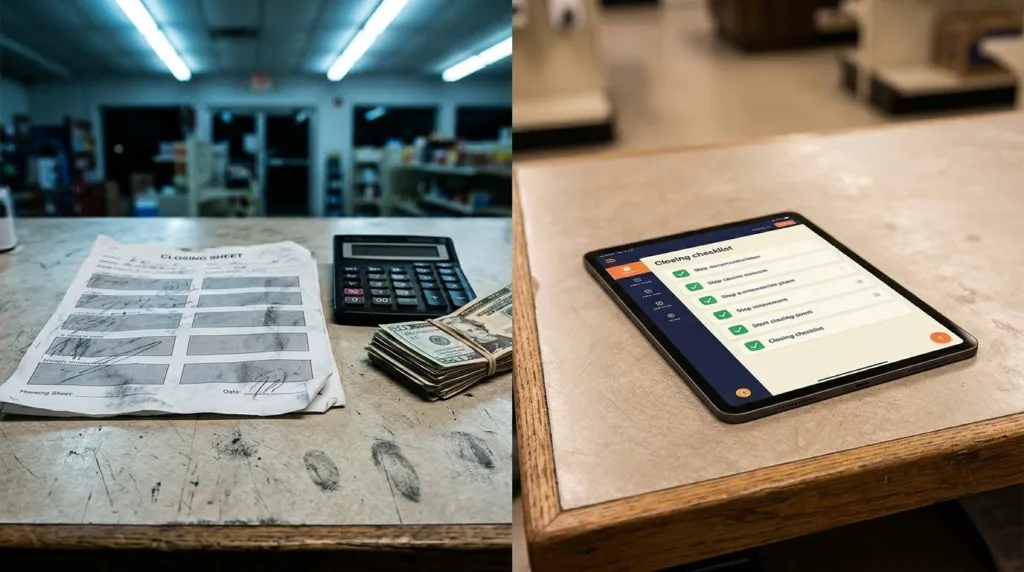
From a Paper Checklist to an App the Whole Shop Uses
How a ten-year-old closing sheet became a tablet app, told step by step, including the part we got wrong first.
-
What a Custom Business App Actually Costs (and When a $30 Tool Is the Right Answer)
What drives the price of a custom app, what you get for it, and the honest test for when an off-the-shelf tool is the smarter buy.