Three Seconds and 192 Pixels: New Ads for a Roadside LED Sign
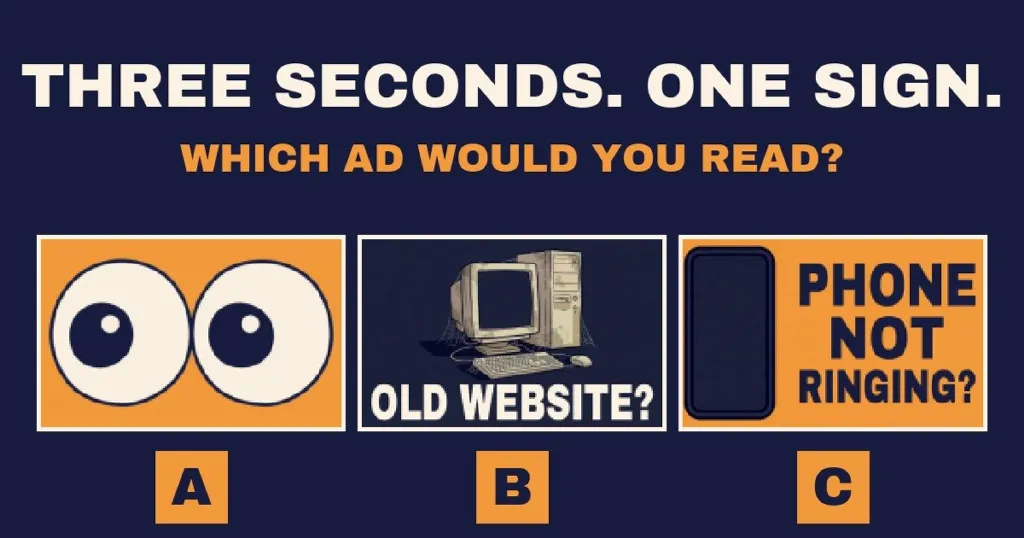
Our own ad on the Meyers Lake Beverage sign was easy to drive past. We made three new ones in an afternoon, built for the size of the sign and the speed of the road. Now we're asking you which one should run.
- 3 sec How long a driver looks at a sign
- 192 x 120 Pixels to work with, on a sign you read from the road
- 3 New ads made in one afternoon
What wasn't working
Our first ad on the sign was orange, with "NEED A WEBSITE?" and then our logo and web address. Nothing was wrong with it. Nobody noticed it either. A roadside sign is a hard place to advertise. The sign is big, but its picture is built from large pixels, 192 across and 120 down, made to be read from the road and not from up close. A phone screen has over a hundred times as many. So small type and fine detail don't survive, and what's left has two or three seconds to land with a driver who is busy driving. On top of that, most LED signs run plain text or the template that came with the sign, and drivers have learned to tune that out. An ad that works on a website or a flyer does not work here. It has to be built for the sign.
What we did
-
Wrote for the Road, Not the Page
Each ad makes one point in two or three words, in letters as tall as the sign allows. If a driver can't take it in at a glance, it's cut.
-
Gave Each Ad One Moving Picture
Movement is what pulls an eye to a sign. Each ad opens with a single bold picture that moves: eyes that follow traffic, an old computer that becomes a new one, a silent phone that starts to ring. We made the pictures and the motion with Google's Gemini, then kept only the seconds that mattered.
-
Finished Them at the Sign's Exact Size
We matched each clip to our brand colors, added the words and our logo, and built the finished ads pixel for pixel at the sign's own 192 by 120. Then we checked every one at that size, because an ad that looks sharp on a laptop can fall apart on the sign.
What changed
One forgettable ad became three that were each built for the sign: one point, one moving picture, and letters sized for the road. All three took a single afternoon, start to finish. The vote is open now. We'll post the winner here, with the tally and a photo of it running on the sign.
Key takeaway
A sign ad gets three seconds. Give it one picture, one point, and letters big enough to read from the road.
Questions people ask
Did AI make these ads?
Partly. We used Google's Gemini to draw the pictures and animate them. The ideas, the words, the timing, the brand colors and the final sign-ready files were our work. The AI gave us ten seconds of footage per ad. About three seconds of each made it in.
Why three ads and not one?
Because we didn't know which would work best, and guessing is expensive. Making three and asking people costs one afternoon. It's the same reason we test more than one headline on a website.
I have an LED sign. Can you make an ad for it?
Yes. Tell us the make of the sign or the file size it asks for, and what you want people to do when they see it. We'll build the ad to fit your sign exactly.
Next project
-

Digital Solutions Website Design
A Breakfast Spot That Runs Its Own Website From a Phone
Heather's Place, a family-run breakfast and lunch spot in Canton, needed a website that could keep up with a working kitchen. We built the site and a phone app that lets the family change it themselves, with their Clover sales in the same place.
2 taps To mark a dish sold out on the website